

There is some difference of opinion regarding the use of both the journal and the ledger. In addition, the journal is often more readily accepted as evidence into a court of law, owing to the straightforward process used to record transactions in chronological order. Ledgers, including sales, purchase, and general types, are vital for companies. These books, originating from the Dutch word “legger,” are essential for creating financial statements.
- Both the journal and the ledger are indispensable tools in the accounting process, each with its own unique attributes and contributions.
- In this article, we will explore the differences between a journal and a ledger, highlighting their unique features, advantages, disadvantages, and similarities.
- The cash flow statement depicts your cash flow trends by showing you how money moves in and out of your business.
- While the journal is a day-to-day record, the ledger is a summary of money.
- A journal and a ledger are two fundamental components of accounting that serve different purposes in recording financial transactions.
Ledger vs. Journal: Understanding the Backbone of Accounting
It helps a business monitor receivables from customers and produce customer-wise outstanding reports. Transactions are recorded in ledger in classified form under respective heads of accounts. It is known as the primary book of accounting or the book of original/first entry. Liabilities represent the company’s obligations or debts that must be settled in the future, typically by transferring assets or providing services.
- However, it should be noted and due to rise in bookkeeping software, the use of journals and ledgers are decreasing.
- Liabilities represent the company’s obligations or debts that must be settled in the future, typically by transferring assets or providing services.
- If the credits are more than the debits, there is a credit balance.
- This structure supports the ledger’s function as a comprehensive summary tool, offering an organized snapshot of the company’s financial standing at any given time.
- Thankfully, you don’t have to do all this manually, like in the old times.
- Effective utilization of these components is vital for any organization’s financial well-being and success.
- In a typical accounting cycle, transactions are first recorded in the general journal, then posted to the relevant accounts in the general ledger.
General Ledgers

The primary difference lies in their function and sequence in the accounting cycle. The Journal is the ‘book of original entry’ where transactions are first recorded chronologically. The Ledger is the ‘principal book of accounts’ where these transactions are classified and summarised into individual accounts, a process known as posting. Modern accounting software has significantly simplified the process, often combining these bookkeeping tasks into one seamless workflow. However, general journals remain necessary for recording non-routing transactions.
- It helps a business monitor receivables from customers and produce customer-wise outstanding reports.
- Today, most organizations use accounting software to record transactions in general ledgers and journals, which has dramatically streamlined these basic record-keeping activities.
- Let us put both a general journal and a general ledger head-to-head and have a deeper understanding of their differences and their significance in terms of accounting through the comparative table below.
- In our example, the account Depreciation Expense will be debited as of December 31 for $10,000 and the account Accumulated Depreciation will be credited as of December 31 for $10,000.
- It’s also known as the primary book of accounting or the book of original entry.
- Once the transactions are put in the journal, they’re too disorganised to utilise directly in financial reports.
- Therefore, the general journal will have a limited amount of entries.
Upgrade your business with Qoyod’s award-winning software

Each accounting entry must be supported by a narration which describes in brief the nature of the transaction recorded. However, it should be noted and due to rise in bookkeeping software, the use of journals and ledgers are decreasing. Today, the preference is to use computers and software which automate the task of bookkeeping, thus making this complicated task quite easier. Understanding the distinction between a general ledger and a general journal is essential for anyone involved in accounting.
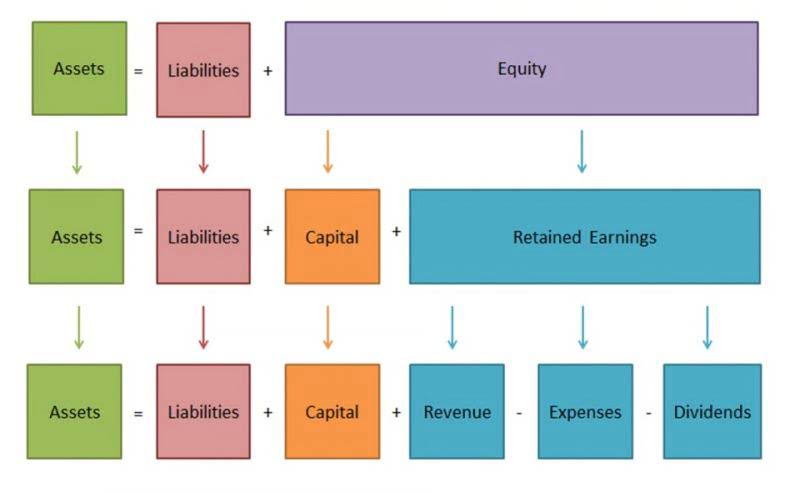
- Accounts receivable and other detailed accounts go into the chart of accounts.
- You can use T accounts or create entries in a hand-written general ledger which is separated by account.
- You can automate both your general journal and general ledger with modern accounting software.
- Let’s use an office supplies purchase as an example for comparing the ledger and the journal.
- Learn about their purposes and how to distinguish between the two.
The journal is where it all starts—it documents financial transactions as they happen, leaving no activity behind. But these transactions in their raw data are not sufficient enough to produce financial statements. That’s where the ledger comes in, taking the information from the journal and categorizing it into significant account groups. So, let’s explore in-depth each of these two vital aspects of accounting, their purpose, organization, differences, and how they contribute towards the overall financial position of a business. The ledger shows the account’s opening balance, all debits and credits to the account for the period, and the ending balance. The ledger is essentially a collection of individual accounts, each representing a specific type of financial activity, like assets, liabilities, Mental Health Billing or expenses.
Importance in Accounting Processes
Yet, for purposes of functions being well known to them, the differences are to be maintained. Before preparing statements of finances, one needs to know the way each of them differs in objective, framework, and operations. The use of journals has been on a steep decline with the increasing use of automated accounting systems. Most accounting systems allow the user to enter information directly into the general ledger, skipping the need https://cw15629-wordpress-mld7c.tw1.ru/5-best-trucking-bookkeeping-services/ to make journal entries. So, the need for the journal may have been becoming increasingly obsolete in the computerized environment, but it still holds great importance in bookkeeping.

It provides a clear and organized overview of the financial position of a business, as it contains separate accounts for assets, liabilities, equity, difference between journal and ledger revenue, and expenses. While the journal captures every transaction, the ledger presents a more concise and structured representation of the company’s financial activities. A journal and ledger are two types of books that are routinely used in the process of accounting. Considered key to what is known as double entry accounting, each of these books serves specific purposes within the overall process of keeping accurate financial records.
What is the Difference Between Journal and Ledger
Then a firm posts (transfers) that information to accounts in the ledger. Next, the amounts in the general journal must be posted to the specified accounts in the general ledger. In our example, the account Depreciation Expense will be debited as of December 31 for $10,000 and the account Accumulated Depreciation will be credited as of December 31 for $10,000.